Saxon Switzerland Guide (2026): Bastei, Königstein, Hikes & Getting There
SaxonSwitzerland.com is reader-supported. When you book through our GetYourGuide links we may earn a commission, at no extra cost to you.
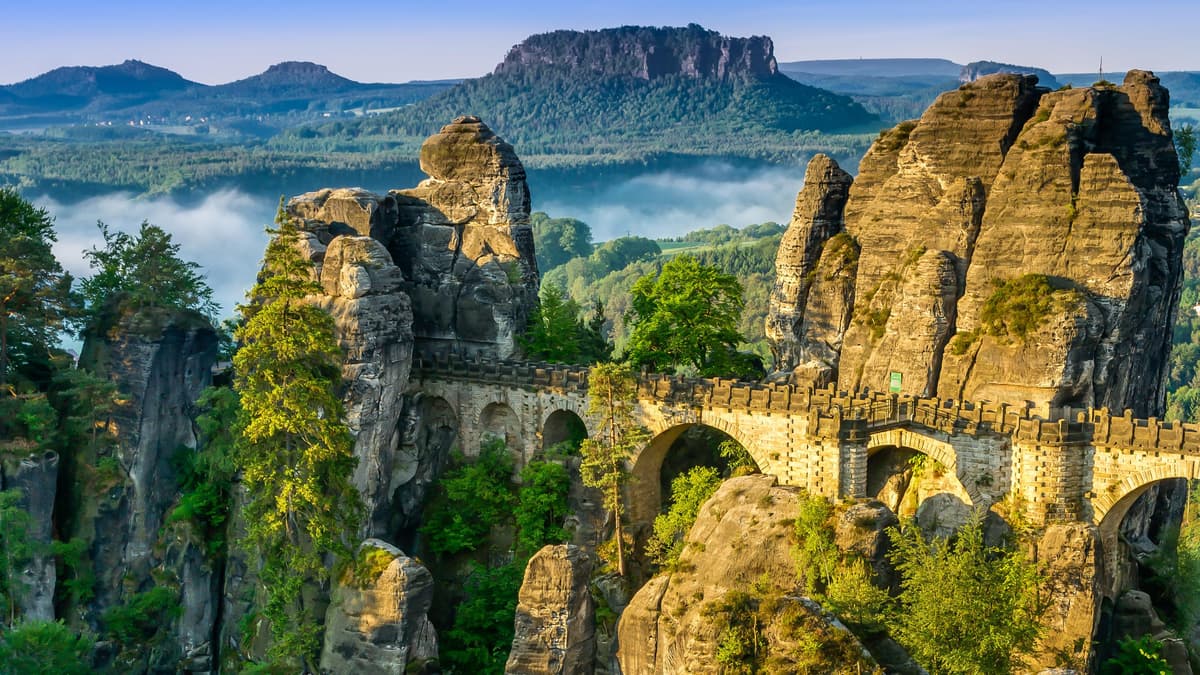
Saxon Switzerland (Sächsische Schweiz) is a sandstone national park on the Elbe, 30–50 km southeast of Dresden, famous for the Bastei Bridge, Königstein Fortress and hundreds of rock towers. From Dresden the S1 train reaches Kurort Rathen, the village below the Bastei, in about 37 minutes, so a self-guided day trip is easy. From Prague it is a full-day trip of roughly two hours each way, which is why most visitors from Prague book a guided tour that also covers Bohemian Switzerland across the border.
This guide covers the whole region in one place: what is where, how to get there from Dresden and Prague, the sights worth your time, the best walks, where to sleep and what tours cost. Each section links to a deeper article if you want the detail.
Saxon Switzerland at a glance
The name is a historical quirk. Two Swiss painters working at the Dresden academy in the 18th century, Adrian Zingg and Anton Graff, said the landscape reminded them of home, and the label stuck. It has nothing to do with Switzerland and the hills are modest: the rock towers rise only a few hundred metres above the river. What makes the region special is the shape of the sandstone — table mountains, gorges, needles and arches cut by the Elbe and its side streams.
- Where: Saxony, eastern Germany, along the Elbe between Pirna and the Czech border at Schmilka. The landscape continues into the Czech Republic as Bohemian Switzerland (České Švýcarsko).
- Protected area: Saxon Switzerland National Park covers two separate core zones, the Bastei/Rathen area and the larger rear Saxon Switzerland around the Schrammsteine, Kirnitzsch valley and Großer Winterberg. Entry to the park is free.
- Main bases: Kurort Rathen (Bastei), Königstein (fortress), Bad Schandau (Schrammsteine, Kirnitzsch valley, trains to Prague) and Pirna (gateway town).
- Getting around: the S1 S-Bahn runs along the Elbe every 30 minutes; boats, small ferries, regional buses and the historic Kirnitzschtal tram fill the gaps.
| Area | Highlights | Station (S1) | Time needed |
|---|---|---|---|
| Bastei & Kurort Rathen | Bastei Bridge, viewpoints, Schwedenlöcher gorge, Amselsee, open-air stage | Kurort Rathen (+ ferry) | Half day |
| Königstein & Lilienstein | Königstein Fortress, Lilienstein table mountain, Pfaffenstein | Königstein | Half to full day |
| Bad Schandau & Schrammsteine | Schrammsteine ridge, Kirnitzschtal tram, Lichtenhain waterfall, Kuhstall arch | Bad Schandau | Full day |
| Pirna & Wehlen | Old town painted by Canaletto, start of the Malerweg | Pirna / Stadt Wehlen | 2–4 hours |
| Bohemian Switzerland (CZ) | Pravčická brána arch, Edmund Gorge boat ride | Bad Schandau, then bus/train via Schmilka or Děčín | Full day |
Getting there from Dresden
Dresden is the natural gateway. Every 30 minutes the S1 leaves Dresden Hauptbahnhof for Pirna, Stadt Wehlen, Kurort Rathen, Königstein, Bad Schandau and Schöna. The ride to Kurort Rathen takes about 37 minutes; Königstein and Bad Schandau are a little further. A VVO day ticket or the Deutschlandticket covers the train. The S1 stations at Rathen and Bad Schandau sit on the opposite bank from the villages, so you cross by ferry: the historic cable ferry at Rathen costs €1.50 per adult one way and does not accept VVO tickets or the Deutschlandticket.
By car, the Bastei plateau has a paid car park (€12 for the day or €7 for up to four hours at the time of writing) plus an overflow lot about 3 km away with a shuttle bus (€1 one way, €1.50 return). Regional bus 237 runs from Pirna towards the Bastei. On summer weekends the plateau fills early, so the train-and-hike approach from Rathen is usually less stressful. Full step-by-step options are in how to get to the Bastei Bridge from Dresden.
Getting there from Prague
Direct EuroCity trains between Prague and Dresden stop at Bad Schandau roughly every two hours, and Prague to Dresden takes about two hours. That makes Bad Schandau reachable by train, but the Bastei still needs a change to the S1 and a ferry, so a self-guided Bastei visit from Prague is a long day. Most visitors from Prague choose a guided tour that drives straight to the Bastei and adds Pravčická brána or Hřensko in Bohemian Switzerland. Compare both approaches in Saxon Switzerland from Dresden vs Prague.
The main sights
Bastei Bridge and the Bastei viewpoints
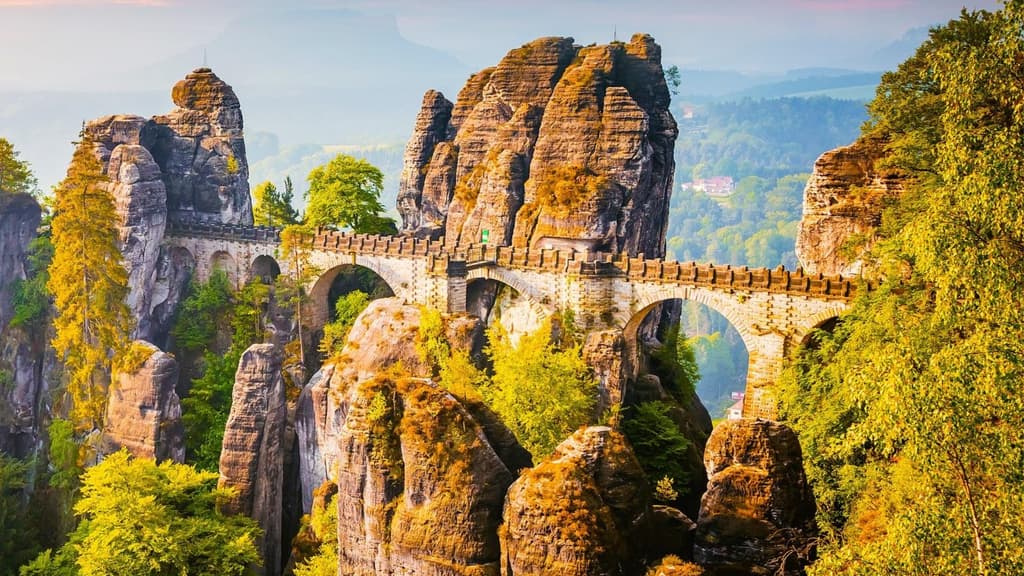
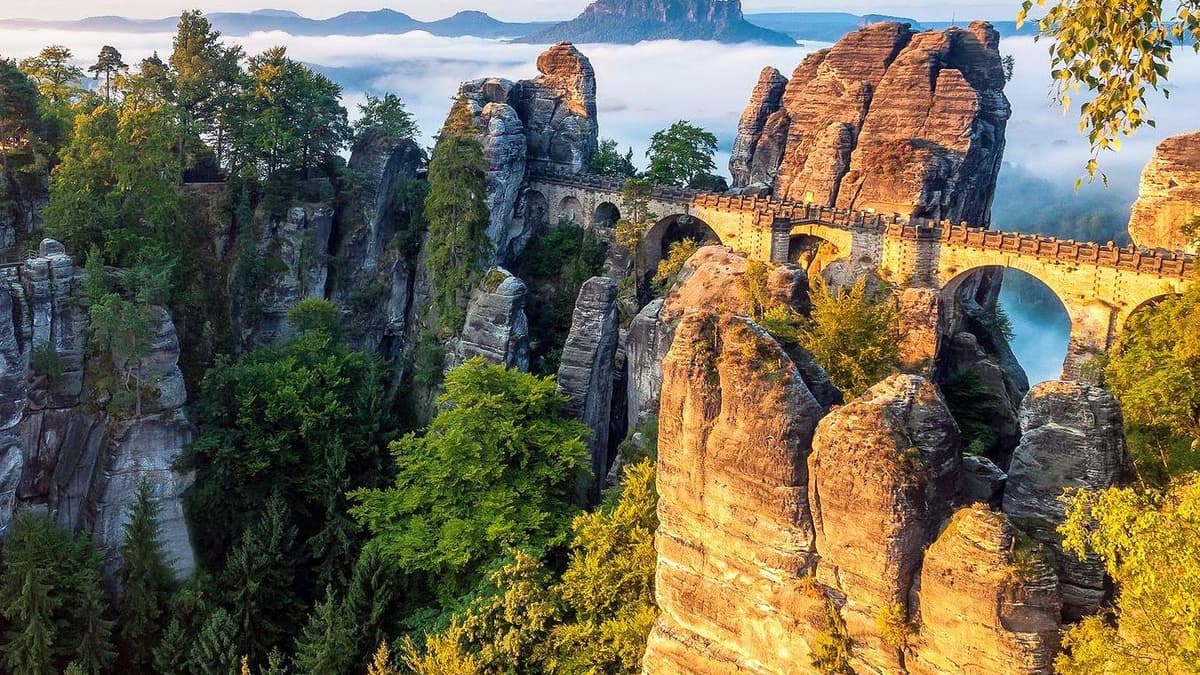
The Bastei is the postcard: a sandstone bridge from 1851 linking rock towers 194 m above the Elbe, with views over the river bend to Lilienstein and Königstein. The bridge and the main viewpoints are free and open all the time. The old Bastei viewing platform was removed after cracks appeared and a new platform at a more stable spot has been in use since 2023. One thing has changed: the ruins of Felsenburg Neurathen, the medieval rock castle next to the bridge, have been closed since September 2023 after monitoring picked up rock movement, and the regional tourism office still listed it as closed until further notice in October 2026. The bridge path itself is not affected. Practical details are in the Bastei Bridge FAQ.
Königstein Fortress
Königstein is one of Europe’s largest hilltop fortresses, sitting on a table mountain 240 m above the Elbe. Inside are museum exhibitions, a deep well, garrison buildings and walls with some of the widest views in the region. Admission in the 2026 main season (28 March–1 November) is €17 for adults, with reduced and family tickets available; winter tickets are cheaper. It opens daily 9:00–18:00 from late March to October and 9:00–17:00 in winter, with last entry an hour before closing. From Königstein station it is about a 25-minute uphill walk, or take the small Festungsexpress road train; a panoramic lift lifts you the last stretch to the plateau. Plan two to three hours. More in the Königstein Fortress FAQ.
The Elbe by paddle steamer
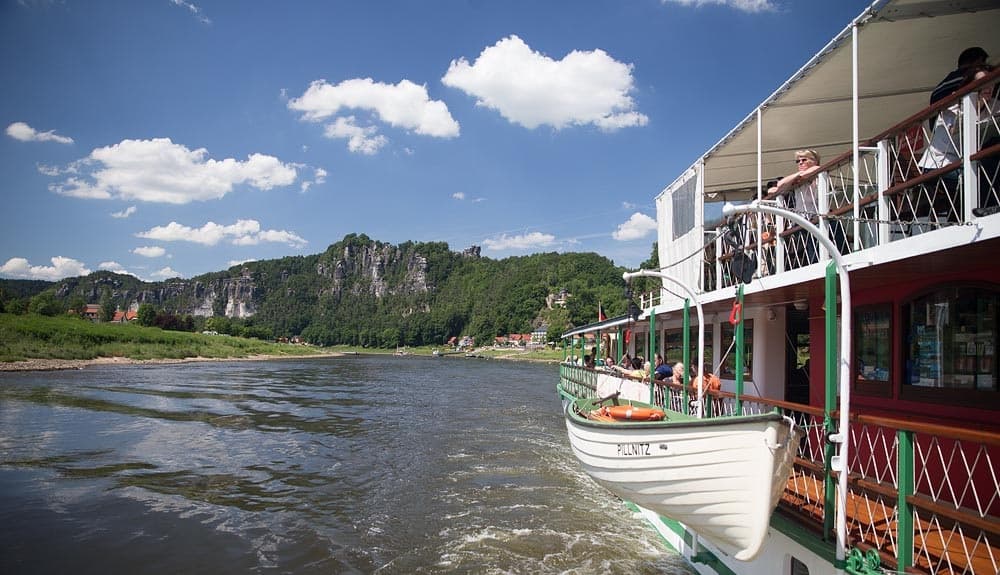
The Saxon Steamship Company runs one of the oldest paddle-steamer fleets in the world, and a cruise upriver from Dresden past Pillnitz Palace into the sandstone valley is a relaxed way to see the scenery. Schedules depend on the water level: in mid-October 2026, for example, several lines into Saxon Switzerland were cancelled because the Elbe was too low, so check before you plan around a boat. Bookable options include the Königstein Fortress paddle steamer cruise from Dresden, from about $35 (Oct 2026), and shorter outings from Bad Schandau such as the Bad Schandau Saxon Switzerland boat trip (from about $31 (Oct 2026)).
Schrammsteine, Kirnitzsch valley and the Kuhstall
Behind Bad Schandau lies the wilder half of the park. The Schrammsteine are a jagged ridge with ladders, iron steps and a viewpoint over the whole Elbe valley; a classic loop from Ostrau is about 7.4 km. The Kirnitzschtal tram, running since 1898, covers 7.8 km from Bad Schandau to the Lichtenhain waterfall; in the 2026 summer season (28 March to 1 November) it runs every 30 minutes, then every 70 minutes in winter. From the waterfall a path climbs to the Kuhstall, the second-largest rock arch in the Elbe Sandstone Mountains, and the narrow Himmelsleiter stairway behind it.
Lilienstein and Pfaffenstein
Lilienstein (415 m) is the only table mountain on the right bank of the Elbe and a strong half-day hike: about 30 minutes up from the car park or an hour from Königstein after the ferry crossing. Pfaffenstein near Königstein is known for the Barbarine rock needle and the Nadelöhr, a squeeze through a narrow crevice.
Bohemian Switzerland
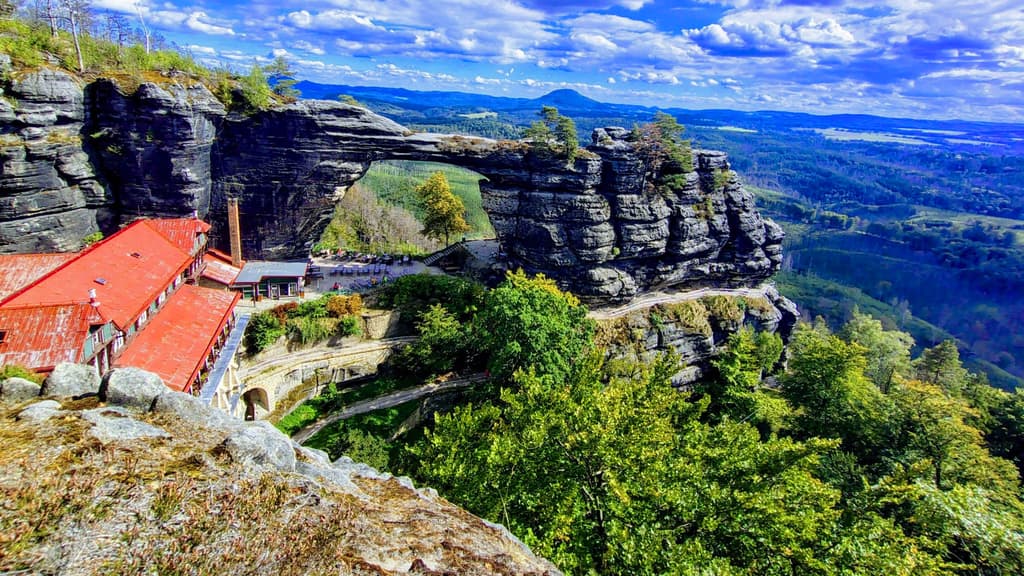
Across the border, Pravčická brána is the largest natural sandstone arch in Europe, and the gorges near Hřensko are run with small boats in season. In 2026 the Edmund Gorge (Edmundova soutěska) reopened on 18 June, with boats hourly from 10:00 to 17:00; the path from Hřensko to Pravčická brána is open daily 10:00–18:00 from April to October and Friday to Sunday in winter. If you only have time for one side of the border, the Saxon side offers more variety; the Czech side has the bigger single landmark.
Best hikes in brief
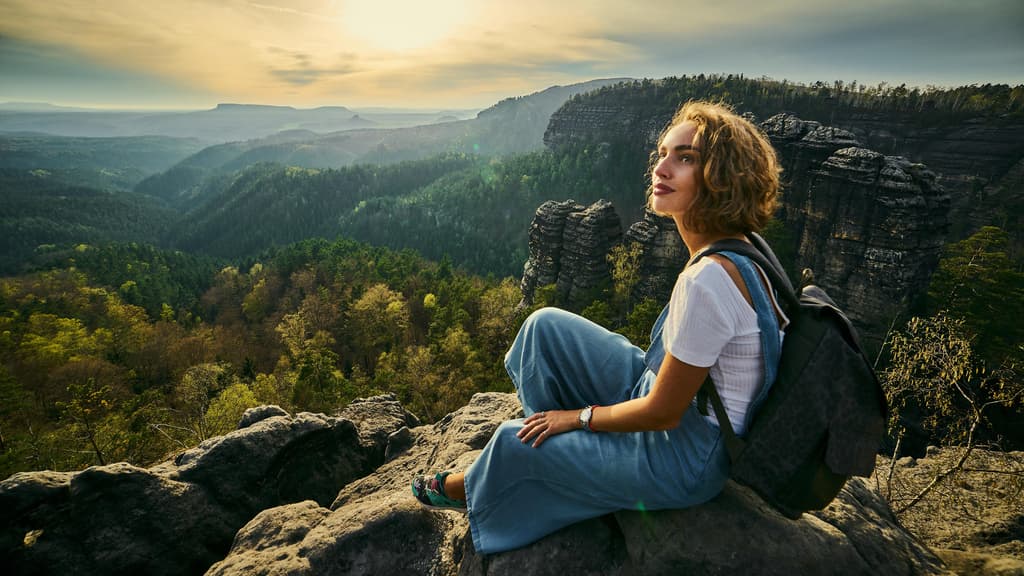
Hiking is the main activity, and the path network is excellent and well marked. The most popular routes:
- Rathen to the Bastei: 30–40 minutes up, about 180 m of ascent; loop back through the Schwedenlöcher gorge (over 700 steps) for a 1.5–2 hour circuit.
- Schrammsteine loop: about 7.4 km and 300 m of ascent, 2.5–3 hours from Ostrau above Bad Schandau.
- Kuhstall and Lichtenhain waterfall: around 10 km as a loop, about three hours.
- Malerweg (Painters’ Way): a 116 km trail in eight stages from Pirna-Liebethal back to Pirna. Parts of stages 2, 3 and 5 had signed diversions in autumn 2026 because of forest clearance and tree-fall risk.
Distances, difficulty and the full Malerweg stage table are in the best hikes in Saxon Switzerland. Forest damage from bark beetles is an ongoing issue: the tourism office advises avoiding the woods in storms, heavy rain or under snow load, and it keeps a live list of closures. Fires and smoking are banned in the forest at all times.
Guided tours: when they make sense
You do not need a tour from Dresden, but tours help when you have little time, want both Saxon and Bohemian Switzerland in one day, or are coming from Prague. Typical options from the October 2026 listings:
| Tour | Starts in | Price | Rating |
|---|---|---|---|
| Saxon Switzerland National Park full-day trip | Dresden | $34 | rated 4.7 from 1,163 reviews |
| Hassle-free trip to Bohemian and Saxon Switzerland | Dresden | $127 | rated 4.8 from 354 reviews |
| Dresden and Bastei Bridge in Saxon Switzerland | Prague | $65 | rated 4.8 from 295 reviews |
| All-inclusive trip to Bohemian and Saxon Switzerland | Prague | $108 | rated 4.7 from 1,640 reviews |
| Bohemian & Saxon Switzerland Iconic Day Trip | Prague | $167 | rated 4.9 from 1,268 reviews |
Prices are “from” prices per person seen in October 2026. The cheapest Dresden option is a guided day built around public transport and walking, while the Prague tours include round-trip transport across the border. Tours that add Bohemian Switzerland cost more than Bastei-only trips because of the extra distance.
See all Saxon Switzerland tours
Where to stay
Dresden works as a base if you prefer city evenings and day trips. For sunrise at the Bastei or several days of hiking, stay in the valley:
- Kurort Rathen: car-free village at the foot of the Bastei; quiet once the day visitors leave.
- Bad Schandau: the biggest resort, with the most hotels, a thermal spa, the tram into the Kirnitzsch valley and direct trains to Prague.
- Königstein: small town under the fortress, handy for Lilienstein and Pfaffenstein.
- Pirna: attractive old town on the S1 line, a smaller and quieter alternative to staying in Dresden.
The trade-offs are covered in where to stay in Saxon Switzerland.
When to go
May, June and September give the best mix of mild weather and long days. July and August are warm and busy, especially at weekends. Autumn colour peaks in October; winter is quiet and occasionally snowy, with Königstein’s Advent market as a draw, but some boats stop running. Whatever the season, arrive at the Bastei before 10:00 or after 16:00 to avoid the coach-tour peak.
Sample itineraries
One day from Dresden
- S1 to Kurort Rathen, ferry across, hike up to the Bastei Bridge.
- Descend through the Schwedenlöcher and Amselgrund back to Rathen.
- S1 two stops to Königstein for the fortress in the afternoon, or take a boat back to Dresden if the river is running.
Two days
- Day 1: Bastei and Rathen in the morning, Königstein Fortress in the afternoon, overnight in Bad Schandau.
- Day 2: Schrammsteine loop or Kirnitzschtal tram to the Kuhstall; or cross into Bohemian Switzerland for Pravčická brána.
With three or more days, add the Lilienstein climb, Pfaffenstein and a stretch of the Malerweg, or base yourself in Bad Schandau and alternate river days with hiking days.
Practical tips
- Footwear: even the short Bastei climb from Rathen is mostly steps; wear shoes with grip.
- Cash: carry some euros for ferries, the tram and small huts.
- Check closures: the regional tourism office publishes trail closures and diversions; the national park info line is +49 35022 50240.
- Climbing: the region is the birthplace of free climbing, with strict local rules — no chalk and no metal protection pieces on the sandstone. Join a guided session if you are new to it.
- Cross-border: Germany and the Czech Republic are both in Schengen, but carry ID; the Czech side uses koruna, though euros are widely accepted in Hřensko.
Frequently asked questions
How many days do you need in Saxon Switzerland?
One full day covers the Bastei and Königstein Fortress. Two or three days let you add the Schrammsteine, the Kirnitzsch valley and Kuhstall, or a crossing into Bohemian Switzerland. Hikers walking the whole Malerweg usually allow eight days.
Is Saxon Switzerland free to visit?
Yes. The national park, the Bastei Bridge and the viewpoints are free. You pay for Königstein Fortress (€17 per adult in the 2026 main season), parking, ferries, the Kirnitzschtal tram and boat trips.
Can you visit Saxon Switzerland without a car?
Easily. The S1 train runs every 30 minutes from Dresden along the Elbe, and ferries, buses and the tram connect the stations with the trailheads. Many hikes are linear walks between two stations.
Is Felsenburg Neurathen open in 2026?
No. The rock castle ruins next to the Bastei Bridge have been closed since September 2023 after rock movement was measured, and in October 2026 they were still listed as closed until further notice. The Bastei Bridge itself is open.
Is Saxon Switzerland worth it from Prague?
Yes if you take a tour or start early. It is about two hours each way, so tours that combine the Bastei with Bohemian Switzerland make the most of the day. From Dresden it is a much easier half-day trip.
More questions answered
FAQ · 7 min read
Bastei Bridge FAQ (2026): Entry, Opening Hours, Hikes & Tips
Bastei Bridge answers: is it free, when it is open, how long to plan, the Felsenburg Neurathen closure, the viewing platform, crowds, dogs and accessibility.
Read the answers →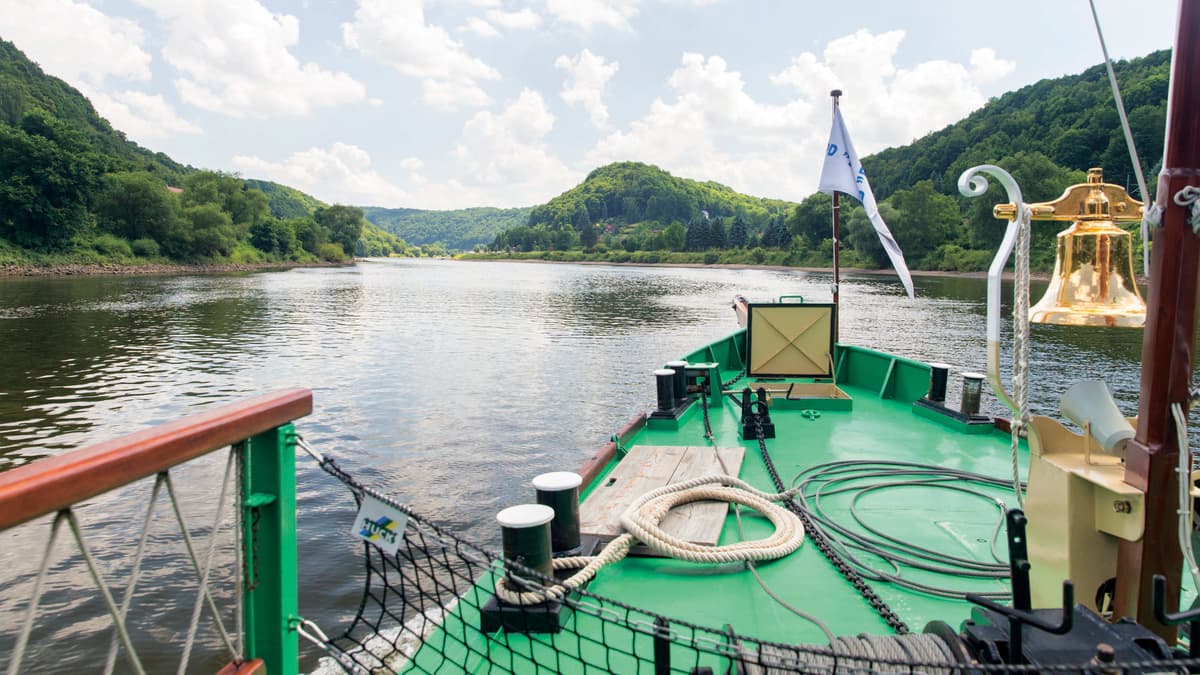
FAQ · 7 min read
Where to Stay in Saxon Switzerland (2026): Best Towns & Bases
Where to stay in Saxon Switzerland: Bad Schandau, Kurort Rathen, Königstein, Pirna or Dresden compared, plus how the free Gästekarte mobil transport card works.
Read the answers →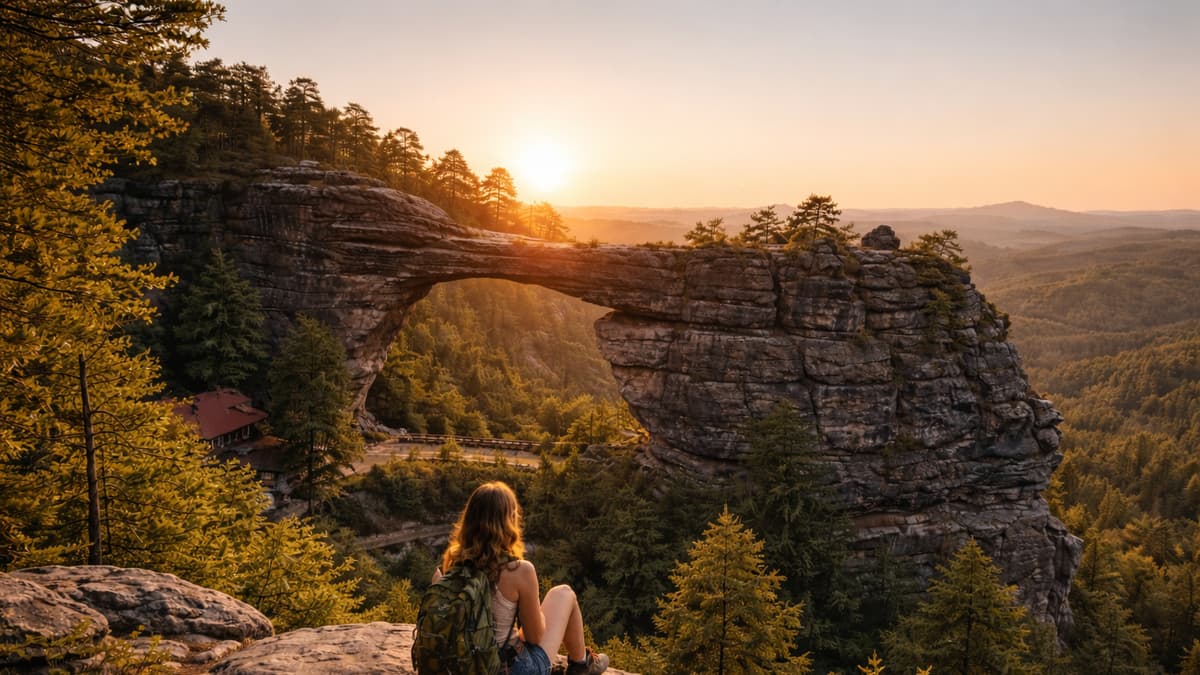
FAQ · 8 min read
Bohemian vs Saxon Switzerland: Which Side to Visit (2026)
Bohemian vs Saxon Switzerland compared: Bastei and Königstein vs Pravčická brána and the Kamenice gorges, fees, access from Prague or Dresden, and tours.
Read the answers →