Where to Stay in Saxon Switzerland (2026): Best Towns & Bases
SaxonSwitzerland.com is reader-supported. When you book through our GetYourGuide links we may earn a commission, at no extra cost to you.
Bad Schandau is the best all-round base in Saxon Switzerland: it has the widest choice of hotels, direct trains to Dresden and Prague, the tram into the Kirnitzsch valley and the Schrammsteine on its doorstep. Stay in Kurort Rathen if the Bastei at sunrise is your priority, Königstein for the fortress and the table mountains, Pirna for a pretty old town on a budget, or Dresden if you prefer city evenings and day trips. All five are on the S1 line, so you are never more than an hour from any of the others.
Overnight guests in most of the region also get the Gästekarte Sächsische Schweiz mobil, a guest card that turns local trains, buses, the Kirnitzschtal tram and most ferries into free transport for the length of your stay. That alone is a good reason to sleep in the park rather than commute from the city.
Where to stay: the bases compared
| Base | Best for | Train to Dresden | Nearby highlights | Atmosphere |
|---|---|---|---|---|
| Bad Schandau | First-timers, hikers, rail travellers from Prague | S1 every 30 min; EuroCity every ~2 h | Schrammsteine, Kirnitzschtal tram, Kuhstall, spa | Spa town, busiest base |
| Kurort Rathen | Bastei at sunrise or sunset | S1, ~37 min | Bastei, Schwedenlöcher, Felsenbühne | Tiny, car-free, very quiet at night |
| Königstein | Fortress, Lilienstein, Pfaffenstein | S1 | Königstein Fortress, table mountains | Small riverside town |
| Pirna | Budget, old-town evenings, Malerweg start | S1, ~20 min | Old town, Malerweg stages 1 and 8 | Historic small city |
| Dresden | City break with day trips | — | Old Town, museums, Elbe | Major city |
1. Bad Schandau: the best all-round base
Bad Schandau is the largest resort inside the park and the most practical place to stay for a first visit. The town sits on the right bank of the Elbe at the mouth of the Kirnitzsch valley; the railway station is on the opposite bank and linked by a small ferry and a road bridge.
- Transport: the S1 every 30 minutes to Königstein, Rathen, Pirna and Dresden; long-distance trains every two hours to Prague, Dresden and Berlin; Czech regional trains to Děčín.
- Hiking: the Schrammsteine loop starts at Ostrau above town (there is a historic lift), and the Kirnitzschtal tram runs every 30 minutes in the summer season to the Lichtenhain waterfall and the Kuhstall.
- Rainy-day option: the Toskana Therme thermal spa.
- Accommodation: the broadest range in the region, from spa hotels to riverside guesthouses and holiday flats.
Downsides: it is the busiest town in summer, and getting to the Bastei means a train ride to Rathen plus the ferry. Bad Schandau is also the best place to break the Prague–Dresden journey; see Saxon Switzerland from Dresden vs Prague.
2. Kurort Rathen: sleep under the Bastei
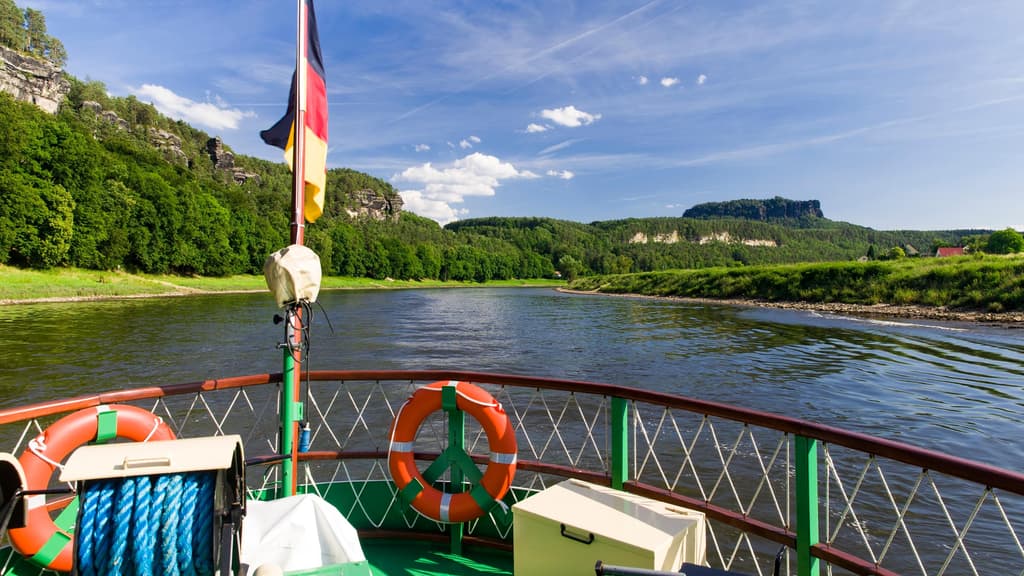
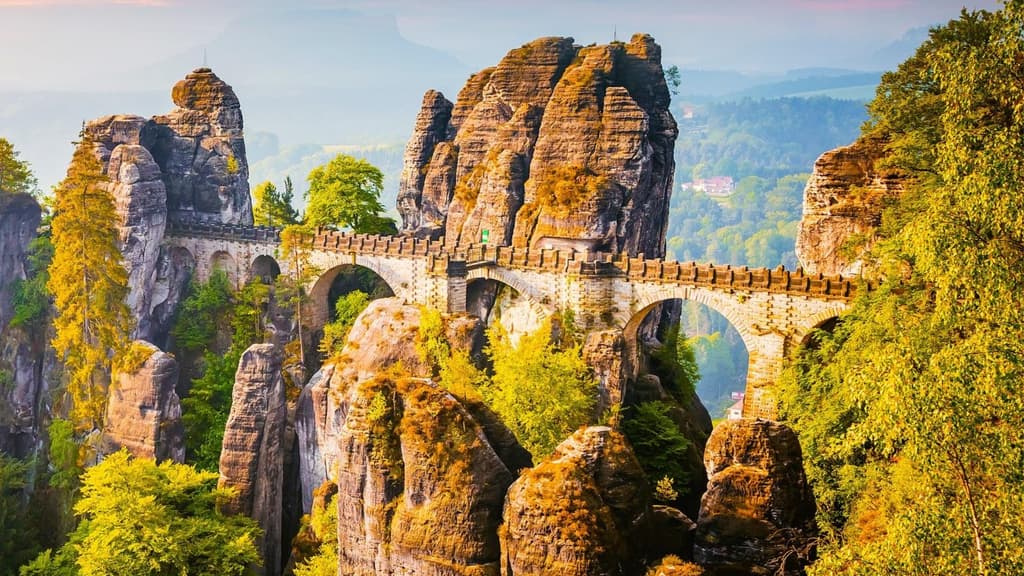
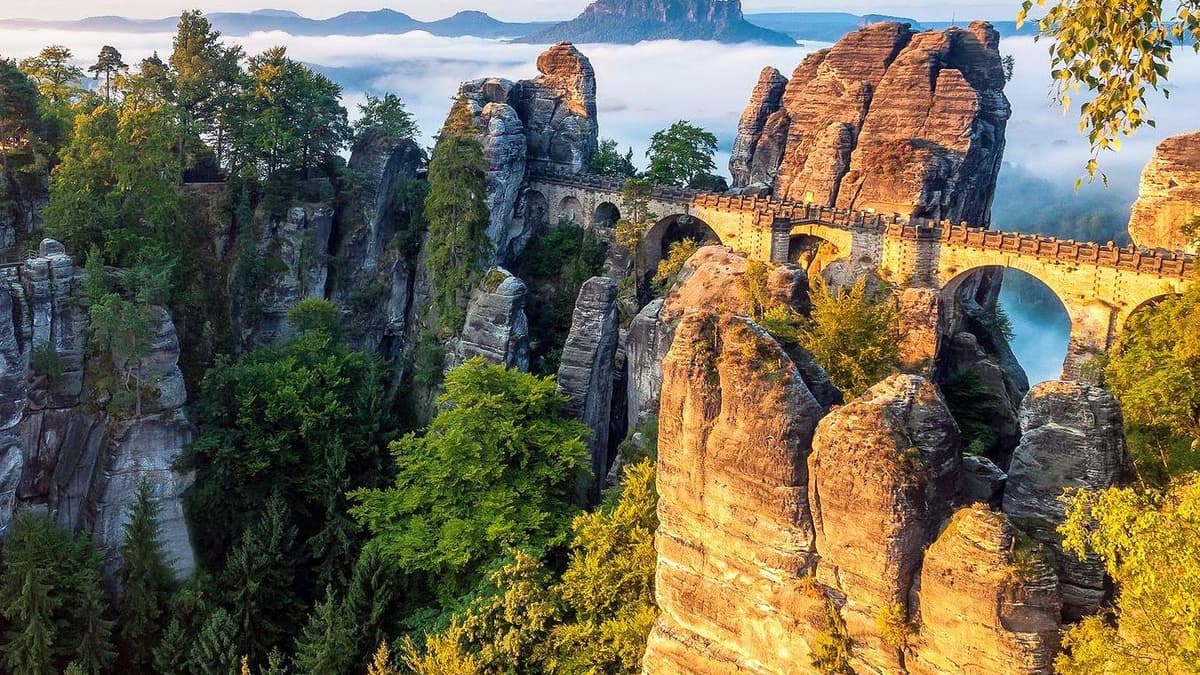
Rathen is a car-free village directly beneath the Bastei rocks. Day visitors pour through between about 10:00 and 17:00, but in the early morning and evening it is peaceful, and you can be on the Bastei Bridge before the first coach arrives. That is the main reason to stay here.
- Getting there: S1 to Kurort Rathen (about 37 minutes from Dresden), then the cable ferry across the Elbe. If you drive, park on the left bank at Oberrathen and cross on foot by ferry.
- Ferry: €1.50 per adult one way. Rathen’s own guest card gives free crossings; the regional Gästekarte mobil and the Deutschlandticket do not cover this ferry.
- Evenings: the Felsenbühne open-air stage stages summer performances against the cliffs.
- Accommodation: a handful of hotels and guesthouses; book early for summer weekends.
Downsides: few restaurants once the day-trippers leave, limited choice, and you carry luggage from the ferry. Hike ideas from Rathen are in the best hikes in Saxon Switzerland.
3. Königstein: below the fortress
Königstein is a small town on the left bank, overlooked by Königstein Fortress and facing Lilienstein across the river. It is a good mid-point between Rathen and Bad Schandau and an easy base for the left-bank table mountains — Pfaffenstein, Papststein and Gohrisch.
- Fortress: about 25 minutes uphill on foot or by the Festungsexpress road train. Tickets are €17 for adults in the 2026 main season; it opens 9:00–18:00 from late March to October.
- Lilienstein: ferry to Halbestadt and about an hour’s climb.
- Transport: S1 station in town; buses 241 and 246 run up towards the fortress.
Read the Königstein Fortress FAQ before you go.
4. Pirna: old town and Malerweg gateway
Pirna is the gateway town where the Elbe enters the sandstone valley, about 20 minutes from Dresden on the S1. Its market square and old streets were painted by Bernardo Bellotto (Canaletto) in the 18th century and remain well preserved. Pirna is also the start and finish of the Malerweg long-distance trail, so it suits walkers beginning the route.
- Pros: more restaurants than the park villages, a real town atmosphere, quick access to Dresden.
- Cons: you are at the edge of the park; Rathen is about 15 minutes further on the S1 and Bad Schandau a little more.
- Guest card: Pirna is one of the towns that issues the Gästekarte mobil, so local trains into the park are free for overnight guests.
5. Dresden: city base with day trips
If you want museums, restaurants and nightlife and are happy to commute, Dresden works well. The S1 runs every 30 minutes to Rathen and Bad Schandau, and you can book day trips that collect you in the city. The downside: you will reach the Bastei at the same time as everyone else and pay for transport that would be free with the guest card.
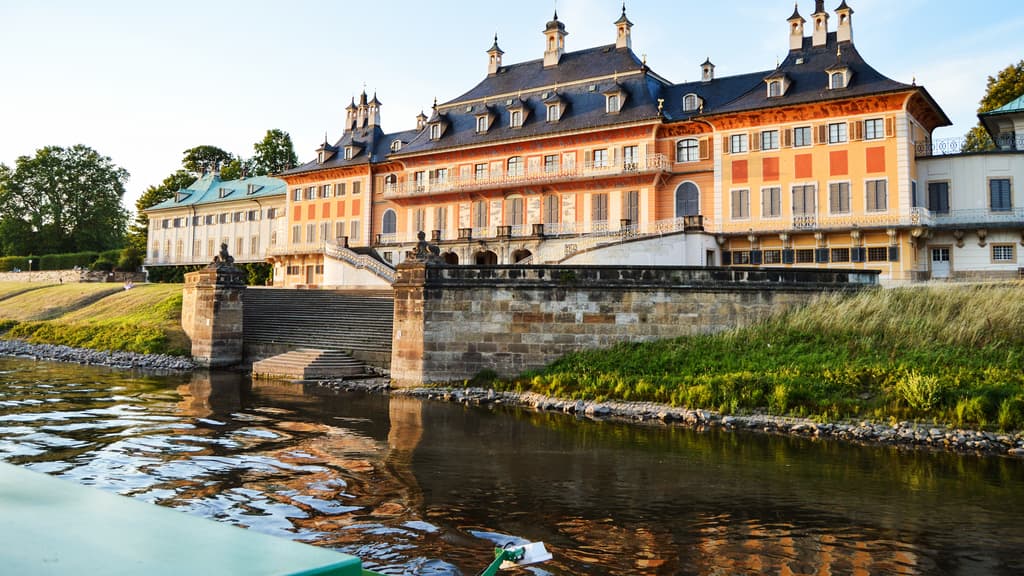
Dresden is also the place for the evening and city tours you might want before or after the park — for example the Night Watchman Tour Through The Old Town (from about $17 (Oct 2026), rated 4.8 from 2,005 reviews) or an Elbe River Cruise to Pillnitz Castle (from about $36 (Oct 2026), rated 4.5 from 2,669 reviews).
Other places worth considering
- Stadt Wehlen: small town on the S1 between Pirna and Rathen, with a walking route up to the Bastei; quieter than Rathen.
- Hohnstein: hilltop town with a castle on Malerweg stage 2/3, good for hikers but with fewer transport links.
- Schmilka: tiny border village on the S1, the Elbe crossing point of the Malerweg, close to the Großer Winterberg and Bohemian Switzerland.
- Hřensko (Czech Republic): handy for Pravčická brána and the Edmund Gorge; read Bohemian vs Saxon Switzerland first.
The Gästekarte Sächsische Schweiz mobil
When you stay overnight in a participating town and pay the local tourist tax, your accommodation issues the guest card. It is valid from your arrival day to your departure day and gives free travel on:
- trains and the S-Bahn, city and regional buses within the Pirna, Bad Gottleuba, Bad Schandau and Neustadt fare zones;
- the Kirnitzschtal tram;
- almost every Elbe ferry — except the Kurort Rathen ferry;
- cross-border bus 217 to Tisá in the Czech Republic.
Participating towns include Bad Schandau, Königstein, Pirna, Wehlen, Hohnstein, Gohrisch, Lohmen, Sebnitz and Reinhardtsdorf-Schöna. It is paper-only, personal and must be filled in and carried with photo ID. Trips to Dresden need an extra ticket, and bikes and dogs need their own tickets.
How many nights?
- One night: Rathen — Bastei in the evening and again at sunrise, Königstein on day two.
- Two to three nights: Bad Schandau — add the Schrammsteine, Kirnitzsch valley and a day in Bohemian Switzerland.
- A week: walk the Malerweg, moving between guesthouses (around eight stages).
If you would rather keep your Dresden hotel and see the park on a guided day, compare tour options and prices below and in our tour price study. The From Dresden: Saxon Switzerland National Park Full-Day Trip is the budget choice at from about $34 (Oct 2026).
See tours in Saxon Switzerland
Plan the rest of your trip with our complete Saxon Switzerland guide.
Frequently asked questions
What is the best town to stay in Saxon Switzerland?
Bad Schandau for most visitors: it has the most accommodation, direct trains to Dresden and Prague and easy access to the Schrammsteine and Kirnitzsch valley. Choose Kurort Rathen if seeing the Bastei at sunrise matters most.
Is it better to stay in Dresden or in Saxon Switzerland?
Stay in the park if you want to hike or see the Bastei without crowds; you also get free local transport with the guest card. Dresden suits travellers who want city evenings and only plan one day in the park.
Can you stay overnight at the Bastei?
There is a hotel on the Bastei plateau itself, and Kurort Rathen below has several small hotels and guesthouses. Both let you visit the bridge before and after the day crowds.
What is the Gästekarte Sächsische Schweiz mobil?
A guest card issued by accommodation in participating towns. It gives free travel on local trains, buses, the Kirnitzschtal tram and most ferries from arrival to departure day. The Rathen ferry and trips to Dresden are not included.
Is Kurort Rathen car-free?
Yes, the village on the right bank is car-free. Drivers park on the left bank at Oberrathen and cross the Elbe on the cable ferry, or use the Bastei car park above the village.
More questions answered
FAQ · 6 min read
Saxon Switzerland & Bastei Tour Prices in 2026: What 19 Tours Cost
We analysed 19 Saxon Switzerland and Bastei tours (Oct 2026): median day trip about $130, Dresden from $34, Prague median $164, discounts up to 45%.
Read the answers →
FAQ · 7 min read
Saxon Switzerland Day Trip from Prague (2026): Tours, Trains & Timing
How to do Saxon Switzerland as a day trip from Prague: guided tours compared by price and rating, the train option via Bad Schandau, and a realistic timeline.
Read the answers →
FAQ · 7 min read
Saxon Switzerland from Dresden vs Prague: Tours, Trains & Time Compared
Saxon Switzerland day trip from Dresden or Prague? Compare train times, tour prices (Oct 2026), time at the Bastei and which base suits your trip best.
Read the answers →